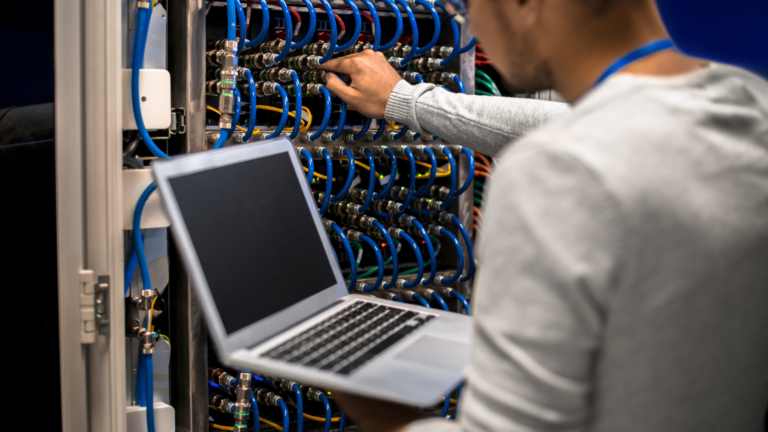
The global IT industry is increasingly embracing refurbished hardware, driven by mounting sustainability goals and tighter enterprise budgets. For IT system integrators in Singapore, refurbished computers, laptops, servers, and networking equipment are emerging as practical options for optimising client investments without compromising performance.
Yet, lingering doubts around security and reliability continue to shape procurement choices. This article addresses those concerns head-on, debunking the most common myths and illustrating why refurbished IT is a sound, strategic choice.
What Does “Refurbished” Mean in IT Hardware?
Refurbished IT equipment refers to pre-owned devices professionally restored to manufacturer specifications and certified for resale. Unlike “used” or “second-hand” equipment, which may be sold as-is, refurbished hardware undergoes stringent quality and performance checks to ensure functionality and safety.
Key stages of refurbishment include:
- Diagnostic testing and inspection: Identifying functional or cosmetic issues.
- Repairs and part replacements: Addressing faulty components with authentic or equivalent-grade replacements.
- Data sanitisation: Permanent erasure of residual data to prevent leaks and comply with industry standards such as NIST 800-88.
- Cleaning and cosmetic restoration: Ensuring professional appearance and usability.
- Firmware and software updates: Patching vulnerabilities and applying the latest updates.
The process is governed by international compliance frameworks, including ISO quality standards, giving system integrators confidence that refurbished IT is not simply recycled hardware — it’s renewed, quality-assured technology.
Common Myths About Refurbished IT Equipment
Myth 1: Refurbished IT Is Just Old or Used Equipment
Many professionals equate “refurbished” with “used.” However, refurbished equipment in IT goes far beyond the resale of an old asset. Genuine refurbishers use structured processes — diagnostics, optimisation, and part replacement — to restore hardware to near-new condition. Unlike used equipment, refurbished hardware comes with certification, testing documentation, and warranty backing its reliability.
Myth 2: Refurbished Equipment Has a Shorter Lifespan
Concerns often arise around wear and tear of previously owned devices. Yet, evidence shows that refurbished computers and laptops match the longevity of new devices when maintained properly. Lifecycle data from hardware vendors indicates that enterprise-grade servers and networking gear are designed for long-term durability, making preventive and corrective maintenance just as effective on refurbished assets. With correct servicing, clients enjoy years of trouble-free use.
Myth 3: Refurbished Hardware Lacks Warranty or Support
Another misconception is that refurbished products lack the after-sales support of new equipment. In reality, reputable providers frequently offer 12-month or longer warranties covering parts and labour. Many also integrate flexible service level agreements (SLAs), including remote troubleshooting and rapid replacements — critical for business continuity.
Myth 4: Performance Is Inferior Compared to New Equipment
Performance is dictated by specifications and condition, not product “newness.” Enterprise-certified refurbishers conduct exhaustive benchmarking to verify throughput, processing power, and stability.
For many data centre deployment services, refurbished servers and switches must meet the same stress-testing standards as new. In practice, refurbished IT often delivers equivalent business performance — with the added benefit of cost savings.
Myth 5: Refurbished Devices Are Security Risks
Perhaps the most entrenched concern is security. Buyers worry about hidden malware, residual data, or unpatched firmware. In certified refurbishing workflows, these risks are systematically eliminated:
- Data is irreversibly erased using industry-standard sanitisation tools.
- Firmware is updated to the latest versions, closing known vulnerabilities.
- Hardware is tested against security compliance benchmarks before resale.
This multi-layered process ensures refurbished electrical equipment meets, and often exceeds, the cybersecurity posture of neglected “legacy” infrastructure still operating in many organisations.
Why Refurbished IT Can Be Secure and Reliable
Refurbished IT is not a compromise; it is a strategic procurement choice built on strict protocols:
- Data sanitisation prevents unauthorised access and ensures compliance with GDPR, PDPA, and corporate governance requirements.
- Rigorous testing replicates enterprise workloads, validating hardware for uninterrupted operations in production environments and aligning with evolving tech advancements in storage and data.
- Firmware patching safeguards against known vulnerabilities, creating a stronger security baseline than ageing in-service assets.
- Certification and quality control provide third-party validation integrators can rely on when reassuring clients.
This combination of reliability and accountability helps integrators confidently position refurbished IT as secure, cost-effective, and sustainable.
How to Choose a Trusted Refurbished IT Provider
Not all providers are equal. To maximise client trust and reduce risk, system integrators should carefully evaluate refurbishers:
- Certifications and standards: Look for ISO-certified refurbishment processes and compliance with NIST or DoD data erasure protocols.
- Reputation and track record: Seek providers with strong partnerships and visible case studies in mission-critical industries.
- Warranty and SLAs: Confirm at least 12-month coverage, with clear service terms for replacements and repairs.
- Support infrastructure: Assess the availability of onsite and remote support, especially for data centre deployment service needs.
Key questions to ask before procurement:
- What refurbishment and testing processes are conducted?
- How is sensitive data sanitised?
- What warranty duration and coverage apply?
- What preventive and corrective maintenance options support long-term performance?
These questions empower integrators to separate credible providers from low-grade resellers.
Final Thoughts on Refurbished IT Equipment

Refurbished IT equipment is not a step down — it is a smart, strategic investment when sourced from trusted providers. For IT system integrators in Singapore, it represents an opportunity to support clients’ budget optimisation and sustainability goals, without sacrificing performance or security.
With professional refurbishment processes ensuring compliance, warranties guaranteeing uptime, and rigorous quality checks mitigating risks, refurbished computers and networking gear deliver enterprise-level reliability.
System integrators can therefore move past outdated misconceptions and position refurbished IT confidently as a secure, reliable, and economically sound choice.
Explore Knowledge Computers’ certified refurbished IT inventory, or use our Custom Server Builder to design a tailored refurbished server. Partner with us to optimise your clients’ IT investments while driving cost efficiency and sustainability.