
For IT system integrators and enterprise IT leaders in Singapore, server infrastructure underpins nearly every business-critical operation. Yet many organisations continue to treat maintenance reactively, responding to failures only after they occur. This approach carries significant financial and operational consequences.
Preventative server maintenance offers a structured, proactive alternative that reduces risk, extends hardware life, and protects service continuity. This article provides a practical framework covering preventive and corrective maintenance, core maintenance components, scheduling best practices, and governance strategies to help integrators build more resilient server environments.
What is Preventive Server Maintenance?
Preventative server maintenance is a scheduled, proactive approach to preserving server health, availability, and performance before failures occur. Rather than waiting for systems to degrade or break down, preventative maintenance addresses potential issues during planned windows, keeping infrastructure operating reliably.
This stands in direct contrast to reactive “break-fix” models, where teams respond only after disruption has already affected operations. Unplanned downtime carries measurable costs: lost revenue, degraded productivity, SLA breaches, and reputational damage that can erode client confidence.
The core goals are consistent: minimise unplanned outages, extend hardware service life, maintain predictable performance, and reduce long-term operational risk and total cost of ownership.
Preventive vs Corrective Maintenance: Understanding the Difference
A clear understanding of what preventive and corrective maintenance is is the starting point for any effective server management strategy.
Preventive Maintenance
Preventive maintenance encompasses scheduled actions designed to avert failures before they occur. For server environments, typical preventive tasks include firmware and BIOS updates, operating system patching, hardware health checks, log reviews and capacity trend analysis.
The defining characteristic of preventive maintenance is predictability. Tasks are planned, resourced, and documented in advance, reducing the likelihood of emergency responses.
Corrective Maintenance
Corrective maintenance refers to actions taken after a fault, degradation, or failure has been detected. Common corrective scenarios include replacing failed disks or recovering corrupted operating systems or firmware, and restoring systems following crashes or performance collapses.
Even in well-maintained environments, corrective maintenance remains unavoidable. Hardware ages, unexpected faults arise, and environmental factors can cause components to fail outside predictable cycles.
Why Both Are Critical
Understanding the preventive and corrective maintenance difference is essential for designing a realistic server management strategy. These are not competing approaches but complementary disciplines. Strong preventive practices reduce the frequency and severity of corrective events, and when failures do occur, well-documented maintenance histories simplify root cause analysis and accelerate recovery.
Together, preventive and corrective maintenance form the foundation of a comprehensive server lifecycle management strategy.
The Business Impact of Poor Server Maintenance
On-the-spot troubleshooting or inadequate maintenance creates compounding risks. Unpatched systems expose organisations to known vulnerabilities, increasing the likelihood of security incidents. Ignoring hardware alerts leads to component failures, triggering unplanned downtime. Ageing infrastructure degrades over time, leading to premature replacements that inflate capital expenditure. The downstream effects extend beyond immediate disruption, affecting SLA compliance, regulatory obligations, and disaster recovery readiness.
For IT system integrators, a client’s poorly maintained server environment poses both a service-delivery risk and a commercial liability. Preventive maintenance should be positioned as a business continuity enabler, not merely an operational task.
Core Components of Preventive Server Maintenance
Preventive server maintenance is only as strong as the disciplines that underpin it. The following core components address best practices for physical hardware, software, and capacity management.
Hardware Health Monitoring
Continuous monitoring of physical components is the first line of defence. This includes tracking disk SMART metrics for early-warning failure indicators, monitoring fan speeds, and verifying power supply redundancy and load distribution to ensure failover capacity remains intact.
Firmware, BIOS, and Microcode Management
Keeping firmware aligned with vendor security advisories is a critical element of preventive maintenance for server environments. Before applying updates in production, integrators should validate changes in test environments and maintain rollback procedures to manage deployment risk.
Operating System and Hypervisor Patching
Scheduled OS and hypervisor updates address both common vulnerabilities and performance-related bugs. Staged patching across clusters reduces the risk of service disruption, while validation in pre-production environments ensures updates do not introduce regressions before rollout.
Capacity and Performance Management
Monitoring CPU, memory, storage, and I/O utilisation trends enables integrators to identify early signs of resource saturation or contention. This data informs scaling decisions, workload redistribution, and hardware upgrade planning, converting reactive capacity crises into planned, controlled transitions.
Designing an Effective Preventive Maintenance Schedule
A well-structured preventive maintenance server schedule aligns maintenance windows with business operations and contractual SLAs. Tasks should be categorised by frequency to ensure comprehensive coverage:
- Daily activities include reviewing health alerts and system logs.
- Weekly tasks cover performance and capacity checks.
- Monthly cycles address patching and firmware reviews.
- Quarterly activities encompass full hardware inspections and failover testing.
Automation and orchestration tools standardise task execution, reduce human error, and generate consistent audit trails. Documenting maintenance outcomes supports continuous improvement, provides evidence for compliance reviews, and creates institutional knowledge that persists through staff changes. A server preventive maintenance checklist template formalises this process, ensuring no critical steps are missed across the fleet.
Corrective Maintenance: A Structured Response When Failures Occur
Even with rigorous preventive practices in place, a structured corrective maintenance workflow is essential. Effective corrective response follows a clear sequence: rapid fault identification and isolation, impact assessment on affected applications and users, hardware replacement or system restoration, and post-incident root cause analysis.
Maintaining on-hand spare components or advanced replacement agreements with suppliers minimises mean time to recovery. Root cause analysis converts each corrective event into an improvement opportunity, with findings feeding directly back into preventive maintenance plans to reduce recurrence.
Preventive Maintenance in Multi-Vendor and Refurbished Server Environments
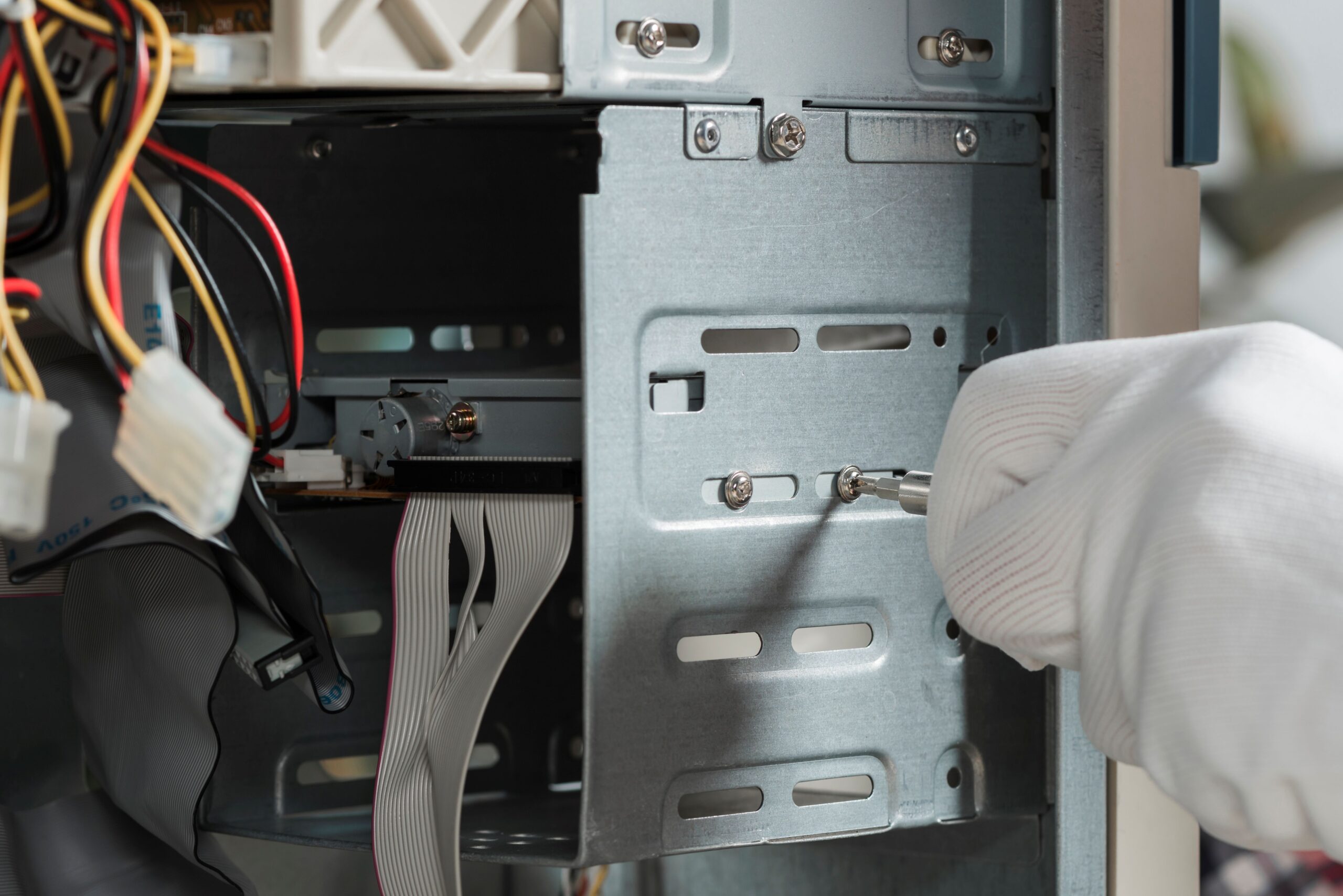
Multi-vendor and refurbished server environments introduce additional complexity that standard maintenance frameworks must account for. Unified monitoring tools and vendor-agnostic procedures are essential for consistent oversight across mixed OEM estates, while clear firmware and support matrices ensure compatibility and update cycles remain manageable.
Refurbished servers warrant particular attention in any preventive maintenance strategy for a computer system and network. More frequent health checks and early-life failure monitoring build confidence that hardware is performing within expected parameters.
When sourced from certified refurbishers with warranty backing, refurbished servers can match the reliability of new equipment, provided preventive maintenance remains consistent throughout their service life.
Automation, Monitoring, and Intelligence in Server Maintenance
Automation reduces operational load and human error across maintenance workflows. Integrating monitoring tools with SIEM platforms, ITSM systems, and alerting and ticketing infrastructure creates a connected operational environment where anomalies are surfaced and acted upon promptly.
Predictive analytics and AI-driven monitoring extend this further, detecting failure patterns before they result in outages. Centralised dashboards provide fleet-wide visibility, enabling integrators to manage large server environments efficiently and respond to emerging risks at scale.
Governance, Documentation, and Compliance
Robust documentation is the backbone of governance for any effective server maintenance programme. Maintenance schedules, patch histories, and hardware replacement records enable faster incident response and align infrastructure management with broader business risk frameworks.
For system integrators, well-governed maintenance documentation strengthens client relationships by demonstrating accountability and operational maturity.
Preventive Maintenance as a Strategic Advantage
Preventative server maintenance is foundational to infrastructure resilience, predictable performance, and long-term cost control. By combining preventive and corrective maintenance into a unified operational strategy, IT system integrators and enterprise leaders can move from reactive firefighting to deliberate, sustainable computer network maintenance.
Knowledge Computers partners with system integrators to design, implement, and optimise preventative server maintenance strategies tailored to your client environments. Contact us now to build a maintenance strategy that works as hard as your infrastructure.